Thursday, September 4, 2025

WHY ARE MY BOXWOODS BROWN?

 The Scourge of Box Tree Moths and Caterpillars.  Why are all the boxwoods dying in Michigan?

     Within two weeks they were gone.  The beautiful boxwood hedges we had planted and nurtured for five years turned brown in a matter of days.  The summer was hot and rather dry, but not unsually drought-like.  Yet the well established shrubs appeared to be dead.

Ramped up watering, but the patients continued to decline.  Nearly all the boxwoods in the neighborhood appeared to be dying, especially those exposed to direct sun.

The culprit--dozens of tiny green caterpillars consumingthe leaves of the bushes, leaving behind a sticky brown mess. 

Our kids had begrudgingly planted the baby shrubs for Mother's Day years ago.  I was certain the poor shrubs were cooked and lamented the amount of work and cost involved in replacing several hedges.

 The lovely shrubs had given pleasure all year long.  Their lush greenery sweetened up floral arrangments in the winter and spring.  Draped in net lights during the holidays they were magical, especially after a heavy snow.  In the summer they added structure to the garden around our old English Tudor.

The culprit was identified as the Box Tree Caterpillar which evolves from a moth encased in a white sticky web-like pod.  

Native to Asia, this insect has become a destructive force in Europe. Its larvae are voracious feeders, consuming boxwood leaves and eventually the bark, leading to plant death. The moths hitchhiked their way across the ocean in infested nursery stock/Buxis plants. Now they are eradicating most of the boxwood shrubs in many parts
of North America, including Michigan.

The infestation lasts about forty-five days from caterpillar to moth, but most of the damage occurs in the first two weeks.

The yard is looking pretty pathetic between the brown shrubs and the deer damage. Ugg.

How to treat Boxwood Caterpillar Insects?

In mild cases, an early spray of vinegar water may deter the moths from alighting on the shrubs. The most effective method is to spray shrubs early in the summer with Traizicide or Sevin. The bugs immediately disappeared. Unfortunately almost the entire hedge was infested.

The chemistry was effective, but may have waited too long to act.

These are serious chemicals. Be sure to wear rubber gloves, clothing which covers the body and a mask.

Will the boxwoods come back to life?

In our case, we were surprised and relieved to see that most of the heldges are regenerating. There is new green growth on most. So the answer is "wait and see." Try watering the shrubs at the base nearly every day, but not soaking the plants. An application of Miracle Grow Fertilizer to the plants appeared to encourage growth. Boxwoods do not love acid, so avoid Muracid. There are also fertilizers which are targetted such as Boxus.

They may never come back fully, and it will take at least one season for them to appear normal. Trimming is on hold until late Spring.

The end of one hedge, which receives more direct sun than the others is not regenerating. That section received less water early in the season. It appears stressed boxwoods like these are most vulnerable.

Cautiuosly encouraged, but time will tell. Winters can be challenging in Michigan, even without invasive insects.


Older, more established boxwoods seem more vulnerable.

How to avoid insect damage to boxwoods next year?

There are no plans to excavate any plants except those which have no green growth after several weeks. It's only fair to give the hedgerows a full season to regrow. The strong chemistry eradicated the bugs.

Assuming they survive, the plan is to spray Triazicide in early spring and to be more viligant at the firs
t sign of browning. The caterpillars are tiny and thier color is very similat to the leves of boxwood. They are not easily apparent. A second round will follow if the insects materialise.

Further, halp the shrubs avoid stress by keeping them watered.

Finally, access to light will help the beleagured plants,  Trim back overhanging neighbors to allow more light exposure.

Fingers crossed that a gardening crisis may have been averted, but swifter action would have
increased the odds of a positive outcome.

Now if only to find a way to discourage the deer from treating the rest of the yatd as a drive up salad bar! 


 Maybe some netting?

ADDITIONAL READING BACK WHEN BOXWOODS WERE SAFE:

GREEN HEDGES AND BOXWOOD FENCES

BOXWOOD BURN

FOUNDATION PLANTING TRADITION WITH A TWIST

Monday, May 5, 2025

Zone Five and a Half: Hydrangea Die-Back

Zone Five and a Half: Hydrangea Die-Back: Winter got me like .. WILL MY HYDRANGEA COME BACK? The long cold winter is a not so fond memory. Souvenirs of protracted cold  are sho...


Wednesday, October 9, 2024

Wednesday, April 27, 2022

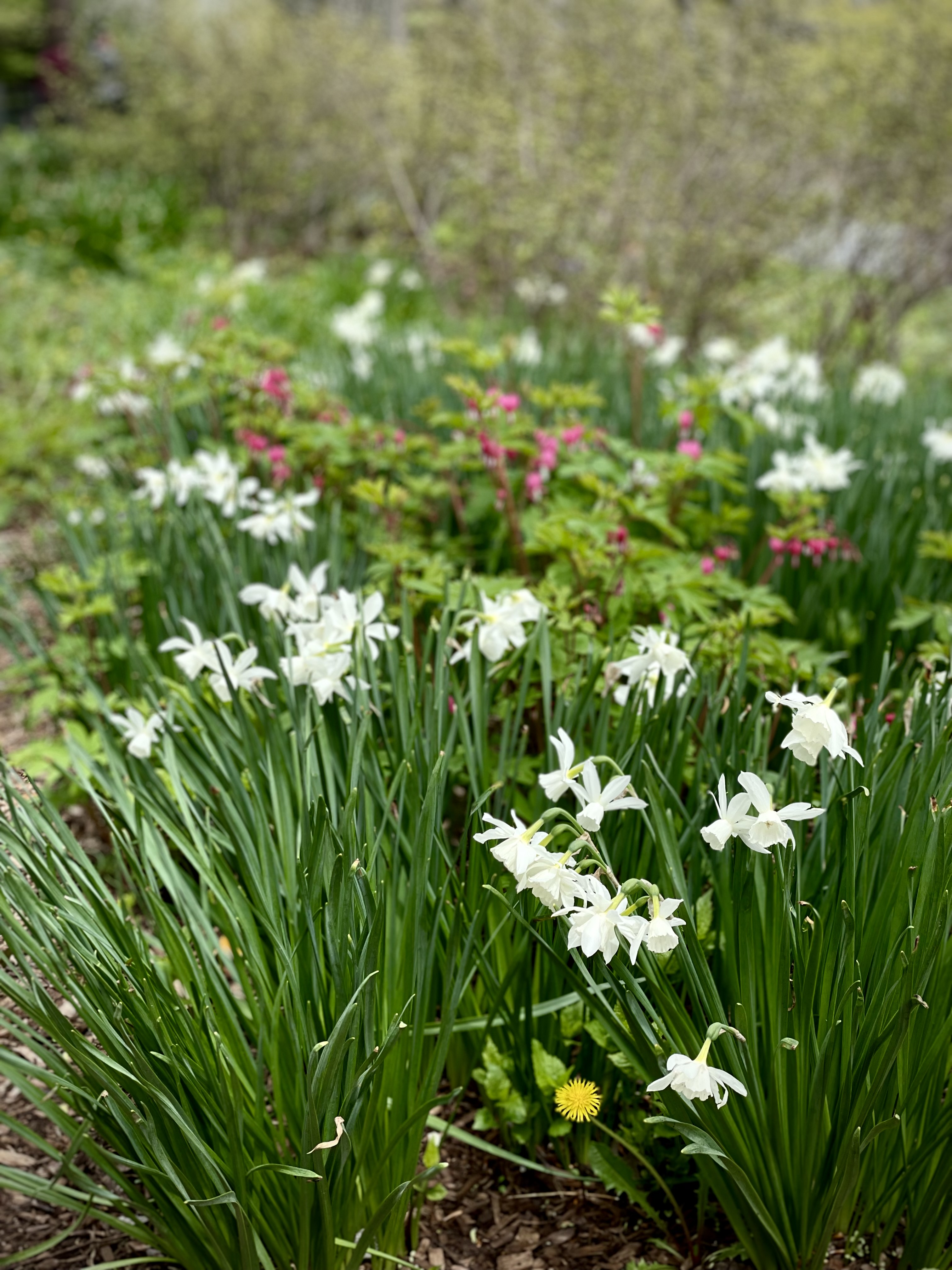
The Thrill of Daffodils ~~ Old School or Frills?

Who knew these yellow harbingers of spring were such troublemakers?  At a recent estate sale, I unearthed a book of collective articles by a local retired garden writer.  That dollar purchase grew a huge return on investment.  

While full of practical and knowledgeable garden advice, the articles were  written in the nineteen seventies and eighties--a time when the industry began to literally bloom with new offerings, introductions and cross breeds.  The struggle of this writer to accept the new yet remain true to mainstay plants is an overriding theme.


Gardeners are adaptable, but at the same time protective of reliable species that
diminish in commercial availability due to a decrease in demand.  The cause?  New introductions of "sexier" plants sprouting colors and accents not seen before in the yard. 

Whatever the make and model, these sunny blooms brighten up the landscape and provide a sunny contrast to the gray skies of spring.  

RELATED POSTS:


Monday, October 25, 2021

Oudolf Garden Detroit

Nancy Brown Peace Carillon
    Piet Oudolf Opens Public Garden on Detroit's         Belle Isle.

    When "rockstar" garden expert Piet (pronounced     Pete) Oudolf received a letter from a Detroit garden     club member asking him to please consider     producing one of his signature naturalist gardens in     the Motor City, one would have expected a polite     refusal at best.  The Dutch designer is one of the     most sought-after of this century.  Oudolf's clients are  generally limited to wealthy landowners or   municipalities with a robust tourism industry.  

Ever walked the High Line in New York City's Chelsea district or the Lurie Garden in Millenium Park in downtown Chicago?  These Oudolf creations attract millions of visitors each year.

Oudolf not only responded to the cheeky Detroiter, he ultimately agreed to design a naturalistic garden installation on an island park in the city.  To assist with fundraising and offset his fees, Oudolf flew from his home in the Netherlands for a slide presentation and book signing at a downtown university. 

The garden club, partnered with the State of Michigan, raising the necessary funds to compensate Oudolf and purchase the massive amount of native plants needed to populate his design.   Volunteers installed and tended the garden.

Launched in the summer of 2021, Oudolf's Detroit garden has flourished.  Experienced gardeners expect first year gardens to be sparse.  Due to the loving care of volunteers, dense native plantings, and favorable riverfront climate, the garden is already lovely.   It will only improve. 

Positioned on Belle Isle, in the shadow of an elderly clocktower overlooking the Detroit River, the garden sways to the gentle river breezes.  The naturalistic plantings are in sharp contrast to the neighboring gated formal Conservatory garden.

Piet Oudolf's gardens feature the natural landscape.  His gardens conform to the chosen site in form and substance.  Oudolf does not bend the environment to meet his vision.  The world acclaimed garden designer adapts his design to embrace the locale and the vagrancies of nature unique to the site.  His Detroit garden reflects the gritty city's resiliance and innate yet simple beauty.

Belle Isle is located where the Detroit River opens to Lake St. Clair.  Developed in the nineteenth century, the 982 acre island is connected to mainland Detroit by the Macarthur Bridge, a sweeping 2,193 foot structure consisting of 19 arches which was built in 1923.  

The island is home to numerous attractions, including an aquarium, nature center and trails, Great Lakes Museum, golf course, sandy beach, casino/event space, Scott Fountain, Coast Guard station and a yacht club.  A wide ribbon of pavement encircles the island, hosting organized runs, biking, walking and the Detroit Grand Prix.  Now Detroit has its own Oudolf garden.

The Oudolf Garden Detroit is rated 12/10.  

There is no charge to enjoy the garden, but donations are gratefully accepted. 

Related articles:  


Sunday, May 16, 2021

Zone Five and a Half: Best Shade Annuals


Zone Five and a Half: Best Shade Annuals: WHAT ARE THE TOP ANNUALS FOR SHADE GARDENS? Annuals are one season showstoppers. Typically native to warmer climates south of zone eigh...

Friday, June 12, 2020

Why Are The Leaves of Plants Turning Yellow?

Yellow is not mellow when it should be green.  Why are the leaves of my cleome yellowing?  When plant leaves fade to gold, the first culprit is lack of sun.  The other causes are not as obvious.

1.  Mulch:    Well intentioned gardeners who mulch heavily with shredded hardwood  may notice discoloration of the leaves of annual flowering plants.  During spring rains tannins from the wood leach into the top surface of the soil and are absorbed by the roots of young plants, especially annuals.  The result may be yellowed leaves, especially at the base of the plant.

2. Too much sun:  New plants, especially those grown in a greenhouse may discolor in the full sun.  It's best to plant new growth during the rainy overcast days of spring or fall to minimize stress on the plant. If that's not possible, shield the plant with cardboard or a partially (but not fully) tipped dark plastic pot for a few days.  The plant will eventually adjust to sunlight.

3.  Moisture stress.  The most common cause of yellowing leaves is too much, or too little water.  Plants all have different water requirements.  First look up the actual needs of a specific plant.  Most full sun plants require more water than shade lovers.  Overwatering in the shade also leads to fungal infections.  Best measurement is still by touch.  Poke a finger into the surrounding soil.  It should feel damp but not soaked.  If the area is powdery, then water.  If it is soupy, wait until it drains.


4.  Inadequate drainage:  Heavy clay soils cause water to pool.  The top of the plant's root ball may appear to be adequately watered, but clay substrate  causes water to accumulate below the surface, at the roots.  If the yellowing plants are in a pot, drill drainage holes, or tip the pot on its side onto the grass allowing stagnant water to drain.

5.  Fertilizer burn:   Well meaning gardeners often treat yellowed leaves with heavy doses of fertilizer.  Unfortunately, no amount of fertilizer will help an ailing plant.  The added introduction of plant stimulants only causes further plant stress.  Even healthy plants (and grasses) will turn yellow if too much plant food is applied.  It's better to introduce weaker, more frequent doses, if needed.

6.  Chemical over-spray:  Droplets from lawn or tree chemical spraying can attach to the leaves of annuals or perennials and cause burning of the leaves.  Water the garden heavily after a visit by Lawn Green, directing the water spray at leaves-rather than roots.

7.  Nature:  Some plants simply turn yellow earlier than others, and before the official start of fall color.  Bleeding heart, for example, turns yellow in mid August.  Hosta begins to age in early September. 

There's no spray or plant pill for yellowing leaves.  Remove those that have turned--they won't return to the green zone.  If the base of the plant remains healthy, perennials will likely return the following year. 

If the issue is be cultural, relocate, shelter, adjust watering or fertilizer practices.

Yellowing leaves are unavoidable. 

They're how plants communicate their displeasure with us. 

Related topics:

Why Are the Maple Leaves Brown?

Will My Garden Survive This Drought?


Thursday, March 12, 2020

Impatiens 2020 -- Give Them A Grow!

Imara Impatiens
It's 2020, a new decade, so may we finally plant impatiens?  Are Busy Lizzies back in business?  The answer is yes, as to Imara impatiens.

Since the  outbreak of the insidious downy mildew seven years ago, impatiens have been persona non grata in the garden. The resurgence of the disease year after year caused the busy lizzie to fall in popularity.


Imara Impatiens 2019


Last year Imara Impatiens were introduced into the U.S. market in limited quantities.  Flats were pricey--at my midwest farm market, the cost was about double the price of "ordinary" impatiens.

But these flowers performed well, mounding and filling in like their predecessors.  No sign of downy mildew.

Imara are indistinguishable from traditional impatiens.  Colors are limited, but that may change with the passage of time.

There was a bright side to downy mildew.  It caused gardeners to diversify and familiarize themselves with alternative blooms like begonia, coleus and vincas.

It's lovely to welcome back an old friend to the garden, while keeping the new close at hand.

Related posts:

Imara Impatiens Review 2019

Bye Bye Bizzie Lizzies - What to Plant Instead of Impatiens

Best Midwest Shade Annuals


Thursday, July 18, 2019

Imara Impatiens Review 2019

Is there a spore or disease resistant strain of impatiens that can beat downy mildew?  

The jury's out.

Since the widespread outbreak of the insidious downy mildew six years ago, impatiens have plummeted in popularity.  Once the top shade annual in most European and U.S. gardens, the resurgence of the disease year after year caused the busy lizzie to fall in popularity.

Introduced in Europe in spring trials for 2018, Imara has now come to the U.S., and is offered in limited quantities.

In Swahili, the term Imara means "strong" or "resolute."

Planning to avoid traditional impatiens this year, I was intrigued by the appearance of a "disease resistant" strain at the county farm market.  After plopping down thirteen bucks for a flat of Imara impatiens let's hope the plants not only thrive--but plant themselves!

Bred from seed, Imara claims to be "The first impatiens walleriana with a high degree of resistance to downy mildew."  The grower also promises Imara will flower earlier and last longer to frost"--but only time will tell.

There is no difference in appearance from the former moldy variety.

Individual plants look healthy and full.  In the ground for a few weeks, there's no sign of disease.
.
So it it time to "take back the shade?"  Unclear, but "stand by" for further updates.

July 2019 update:  Despite a very rainy June and July, there's no sign of downy mildew.

Fingers crossed.


More on impatiens plight (blight:)

Bye Bye Busy Lizzies. What to Plant Instead of Impatiens?

Impatiens Update 2019

Imara going strong August 2019

Friday, January 25, 2019

Busy Lizzie or Bust? Should I Plant Impatiens in 2019?

Is it safe to plant impatiens this year? 


Appearances can be misleading.  If nursery shelves are any indication, then impatiens walleriana seem to be a go this year.  Downy mildew has now plagued this staple of the shade garden for at least a half dozen years.  Sadly, the disease  shows no signs of letting up.

Yet it's tough to pass up those lovely flats of pinks and salmons each spring.  But robust, healthy looking plants may whither before season's end, leaving the garden barren when it should have been poppin'. 

Cautious gardeners following expert advice held back from planting colorful  bizzies for the recommended three years--only to find that the disease had either remained in the soil or the dastardly spores had hitchhiked in on new purchases.  

Thus, in 2019, proceed with caution.  At the shop, inspect the undersides of baby plants for spots or dots.  Plants in drier areas or locations which did not host infected plants in prior years.  Impatiens mildew is a water mold. Irrigate in the morning to avoid moisture clinging to leaves overnight.  

Give it a cautious go if you must, and hope for the best. 

Begonia Shade Border
Impatiens are tropical natives.  The tiny seeds are difficult, but not impossible to start.  The moist environs of a greenhouse makes it a good host for killer spores.

Downy mildew only affects one breed, impatiens walleriana

Plan B calls for substitution of colorful alternatives:


Experiment or adapt.  Versatility is the mainstay of gardening.  

Made for the Shade:


Wednesday, October 31, 2018

Best Shade Annuals


WHAT ARE THE TOP ANNUALS FOR SHADE GARDENS?

Annuals are one season showstoppers.

Typically native to warmer climates south of zone eight, annuals flourish in the summer months then die back after the fall frost.

Unlike perennials, which survive the winter months reappearing in late spring, annuals quickly establish, then bloom until frost.

New Guinea Impatiens are disease free
The majority of mass produced annuals require full to partial sunlight. 

Choices are  limited for shade gardeners craving some color, but blooms that thrive in full to partial shade are readily available.

1.  Impatiens:  Fabulous, but risky.  The moldy blight overwinters and could take three to five years before it clears out.  Replanting risks a return to the starting block.  If planting make sure the area is well drained.

2.   Begonia:  Does well in dappled shade.  More disease resistant.  Chose a variety with green leaves
as burgundy and brown stems don't show as well. White pops in the shade.  Pink and red blooms are smaller and do not show as well.  In the fall begonia become a mounding beauty, with a spectacular show before the cold sets in.  Die back in late fall is quick.  Removal is easy as roots are minimal.

2.  Coleus.  Fast becoming a favorite, coleus comes in a plethora of beautiful jewel tones.  Great for the border.

3.  Minimulus/Monkey Flower:  The white blooms are small, ringed in soft purples and pinks and resemble tiny monkey faces.    These rascals require little pruning. 

4.  Pansies:   Deep, stunning and vibrant colors, these are hardy annuals.  Die back occurs during the
hottest summer months.  Cut back and move to a shady location for a second bloom in the fall.  Pansies and violas often survive to spring if sheltered or following a mild winter.

Group in drifts or combinations throughout the yard or in pots.

There's a peacefulness in the shade garden that cannot be measured by the sun.

In early spring, fall-planted bubs will naturalize and flourish before trees bloom.

Observing a shaded garden from a sunny outpost, it appears monotonous.  Not much color is needed, but adding a bit beckons the garden visitor to the coolness under the canopy.

Somewhat Shady:

Best Shade Perennials

Turtlehead and other Fall Bloomers

Friday, August 24, 2018

Finding Piet


CREATE YOUR OWN OUDOLF GARDEN

Piet Oudolf transports the magic of the meadow to the heart of the city.

My first exposure to his work was accidental.  Headed to Grant Park from our downtown Chicago hotel, we passed through an inconspicuous gateway into the Lurie Garden.

Oudolf's creation was in full bloom.  Children padded through the trickling stream-like fountains. Tourists cooled their dangling feet--a respite from the scorching pavement.

High Line Park New York City
In August the garden was a riot of purples and red.  The sturdy Lake Michigan winds oscillated the dancing grasses. 

Later, walks along the High Line near the Chelsea district of New York offered another view of Piet's creative work.  An abandoned railway overpass was transformed into a pathway strewn with calming native plants with trees swaying in the Hudson River breeze. Thousands fill the walkways each day.

Soon Detroit will host a natural Oudolf wonder on Belle Isle--capitalizing on the force of the prevailing winds from the Detroit River at the mouth of Lake St. Clair. 

High Line walkway
How to emulate the master? 

The grounds around my home are (loosely) patterned after English gardens both formal and cottage in deference to the style of the home and the heritage of my beloved.  No place for a pasture.  But, like most gardeners, the plots expanded rather than contracted. 

Two years ago a cottage garden replaced a tumble of ground cover at the base of a stone retaining wall.  It was the perfect landing place for orphan plants, but filled out quickly,  The addition of a gravel border path should have sealed the boundary, leaving the ramble weed hillside below untouched.

High Line in summer
Trouble is, gardeners know no borders.  A year later, the scruffy hillside became the host to a newborn Piet-inspired meadow.

Piet Oudolf'design concepts are simple:

1.  Use noninvasive native plants that will reseed freely and provide winter interest.  No cutting back is required.

2.  Follow the 70/30 rule.  Seventy percent of the plants should be "fillers."  Fillers such as grasses provide volume, height and movement.  They are planted to provide the signature "haze" or "blur" that is the trademark of an Oudolf garden.  Thirty percent of the plants should provide seasonal color through blooms or berries.  Favored colors deeper hues of purple, red and gold. 

Winter Interest High Line New York
3.  Plant in drifts and swaths, the opposite of the riot of plants found in a cottage garden.  Frame the edges with the blur of tassels of grass or big-headed blooms like Joe Pye weed. 

4.  Plant in volume. 

5.  Repeat themes. 

6.  Plant in layers.

before
7.  Plant for all seasons but be aware of the sun or shade requirements of sprouts.

At the end of season, vendors at the county farmer's market sell  plants at a deep discount.  The initial inhabitants of a pasture garden need not be pretty, only healthy.  Thus the cranky vendor occupying the last stall nearly smiled at the offer of two dollars each for a couple dozen of astilbes and pampas grasses.

Clearing the area was the most labor intensive part of the project.  The largest and deepest taproot weeds were dug out by hand.  Those with shallow roots required a stirrup or rake.


The plants were arranged,  to best emulate the Oudolf grid.  We planted using our "patented" wedge method.  We finalized the plantings, then generously sprinkled free wood chips to reduce the occurrence of weeds. 

after

Our little pasture is shaded so we chose astilbe and pampas grass for the fillers then catmint (nepeta) and variegated hosta as thrillers.  More plants will be added in the fall as other plots are thinned.


FOUND GARDENS:

FREDERIK MEIJER SCULPTURE GARDEN


LAFAYETTE GREENS DETROIT


Wednesday, May 23, 2018

Hydrangea Die-Back

Winter got me like ..
WILL MY HYDRANGEA COME BACK?

The long cold winter is a not so fond memory. Souvenirs of protracted cold  are showing up in the garden

This spring some hardy hydrangea are missing the early vitality of prior years.


The year, the Midwest suffered through several days of continuous cold.  Some weeks never saw the thermometer rise above twenty degrees Fahrenheit.

While the seemingly endless snow cover might have offered  insulation for below-ground plants, the living stalks of many hydrangea varietals could not survive the sustained onslaught of icy temps.  Rather than remain dormant, the upper eighty percent of many hydrangea appear lifeless. But that's not fatal for the entire plant.

My lace cap hydrangea hedge, which rounded out above three feet, is only green at the bottom quarter.


Forever and Ever look like lettuce plants.

Annabelle hydrangea, on the other hand, never missed a beat.  It's not yet Memorial Day and these beauties are right on track.  Healthy globes of green.

Annabelles are indigenous to Zones Five and Six.  Many of the newer hydrangea introductions are dubbed "marginally hardy."

For the struggling plant, it's best to stand by.  Don't remove the shrubs so long as they show signs of growth at the base. 

Defer trimming back the brown stalks poking out from the plant base.  But, if the branches were not trimmed back in the fall, cut back by one-third.  Hopefully the remaining stalks will act as plant supports to  new growth.  If they're still protruding by late June, then cut back those that poke out. 

Will there be hydrangea blooms this year?  Yes, but maybe not as robust as past years.

Gardeners are experts in the art of patience.  By next year, if there's fewer troughs of cold, blooms should return to normal.

Annabelle in May
My husband likes to point out how eager I was to pull out a seemingly dead Annabelle hydrangea a few years ago.  Uncharacteristically I agreed to wait.

That Annabelle is a repeat showstopper.


Ignore the funky looking hydrangea until summer is in full swing. 

The vagrancies of nature can be accommodated if anticipated.

More mopheads:

The Incrediball Hydrangea ~ From Annabelle to Forever and Ever

Hydrangea Hedgerows